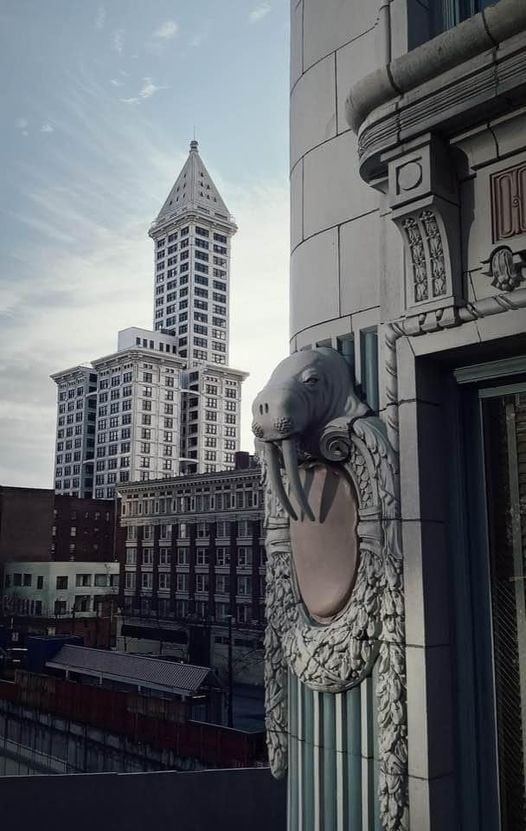
Relocating to Seattle for Amazon or Tech — Crime & Commute Reality
Jeffrey Valcik December 29, 2025
Jeffrey Valcik December 29, 2025
A boots-on-the-ground perspective from a 40-year Seattle managing broker, Corporate Relocation Director, and founder of Seattle Premier Properties.
When my clients relocate to Seattle for Amazon, tech, medicine, or executive roles, the conversation always narrows to two questions:
“Is it safe?”
“How bad is the commute, really?”
This post answers both — not with headlines or statistics, but from daily exposure. I live downtown, work downtown, and walk 3–5 miles nearly every day through the city. This is lived reality, not theory.
Seattle’s biggest misconception is that crime is evenly distributed. It isn’t.
Crime here is:
Corridor-specific
Transit-adjacent
Highly localized
Two streets a block apart can feel like completely different cities. This is why relocation decisions fail when people rely on news coverage instead of geography.
The safest and most predictable pocket in Seattle is what many locals refer to as the Amazon / Google Campus corridor, centered in South Lake Union (SLU).
This pocket generally runs:
From the South Lake Union waterfront to 5th Avenue
From Olive Street west through Seattle Center and the Space Needle
This area functions differently — not because of politics, but because of concentrated economic gravity.
Key factors:
Amazon, Google, and Gates Foundation campuses
Newer high-rise residential buildings
On-site and private security
The newer Federal Courthouse
Immediate proximity to the West Precinct
Limited nightlife compared to residential density
This is also where Seattle Premier Properties is headquartered, and where I live. The reason is simple: predictability, safety, and the freedom to walk at night.
For relocating clients prioritizing walkability and personal safety, this is the area I consistently advise them to stay within or adjacent to.
Let’s talk rent — because this is where theory meets the wall.
In the Amazon / Google / Gates corridor (South Lake Union), current rents realistically run $4.00–$5.00+ per square foot. That’s not marketing. That’s reality. A modern one-bedroom can easily exceed expectations even on a strong tech salary.
This is why people make tradeoffs:
They live farther out than planned
They tolerate corridor activity or nightlife
Or they accept hour-plus commutes
Not because they want to — because the math forces the decision.
If you can afford SLU, it is the most predictable, walkable, and secure downtown environment in Seattle.
If you can’t (or don’t want to pay it), the next choices are compromises — on space, commute, or exposure.
This is also why many relocations start as rent first, buy later — and why buying correctly within 3–4 years often beats renting indefinitely at $4–$5/SF with zero upside.
Much of Seattle’s reported crime comes from a relatively small footprint — Belltown and major transit corridors.
Belltown generally spans:
Western Avenue (Elliott Bay side) east to 4th Avenue
Includes 3rd Avenue, the city’s primary north-south bus route
Intersects with Pike and Pine, a heavy tourist and nightlife zone
Why this area concentrates issues:
Dense nightlife and late-night activity
Tourism overlap
Transit funnels
Social services clustered nearby
This doesn’t make Belltown “bad,” but it does make it volatile, particularly at night and along transit spines.
For clients who want proximity to downtown without the nightlife, clubs, or corridor volatility, I often direct them to Uptown, surrounding Seattle Center at the foot of Queen Anne.
Why Uptown works:
Close to SLU and downtown employment
Far less nightlife concentration
More residential feel
Still walkable
A cleaner transition zone between core and hill
It’s one of the most overlooked relocation solutions.
Capitol Hill is often misunderstood.
It is:
Dense
Highly active
Home to a large transient population
A frequent corridor for marches and protests
Activity historically centers around:
Cal Anderson Park
The East Precinct
March routes from Westlake Center through Capitol Hill
Capitol Hill works well for certain lifestyles.
It is less ideal for clients prioritizing predictability, quiet, and lower exposure to unrest.
That’s not a judgment — it’s a fit assessment.
I’ve survived four decades in Seattle real estate by remaining neutral. My client base spans every political belief, religion, and worldview imaginable. I don’t take sides — I translate reality.
At present:
Courts are overcrowded and constrained
City policy emphasizes diversion and multiple chances
Mental health facility capacity is limited
Individuals arrested for drug possession (including intent), repeat offenses, or unstable behavior are often released back into the system
Regardless of intent, the street-level outcome is predictable — and it impacts certain neighborhoods far more than others.
This is why crime in Seattle is not evenly distributed, and why neighborhood choice matters more than citywide averages.
Seattle is shaped by:
Water
Hills
Bottlenecks
Commute pain is not measured in miles — it’s measured in choke points.
Common realities:
20–30 miles on I-5 or I-90 can take 90–120 minutes
North–South and East–West travel are vulnerable to single incidents
Living “closer” on a map often performs worse than living farther but walkable
This is why many households live an hour or more outside the city — and why quality of life erodes quickly when commute math is wrong.
Seattle works incredibly well — until it doesn’t.
And when it doesn’t, it’s usually because of:
Corridor exposure
Transit adjacency
Rent pressure
Commute choke points
Neighborhood mismatch
Not the job.
Part 3: Can’t Afford Premier Downtown Neighborhoods? Plan B — Where Smart Buyers Go for Safety, Commute, and Upside
If you’re moving for Amazon or tech and want straight answers — not brochures:
👉 Start with Seattle Premier Properties
I’ll tell you what the data won’t — and what matters after the move.
Stay up to date on the latest trends in real estate.
September 24, 2026
September 17, 2026

September 10, 2026
September 3, 2026
August 27, 2026
August 20, 2026
August 13, 2026
August 13, 2026
August 6, 2026
Valcik Bilgin and Associates is dedicated to helping you find your dream home and assisting with any selling needs you may have. Contact him today to discuss all your real estate needs!
JEFFREY VALCIK
EVRIM BILGIN
ADDRESS
120 Westlake Ave N #924
Seattle, WA 98109