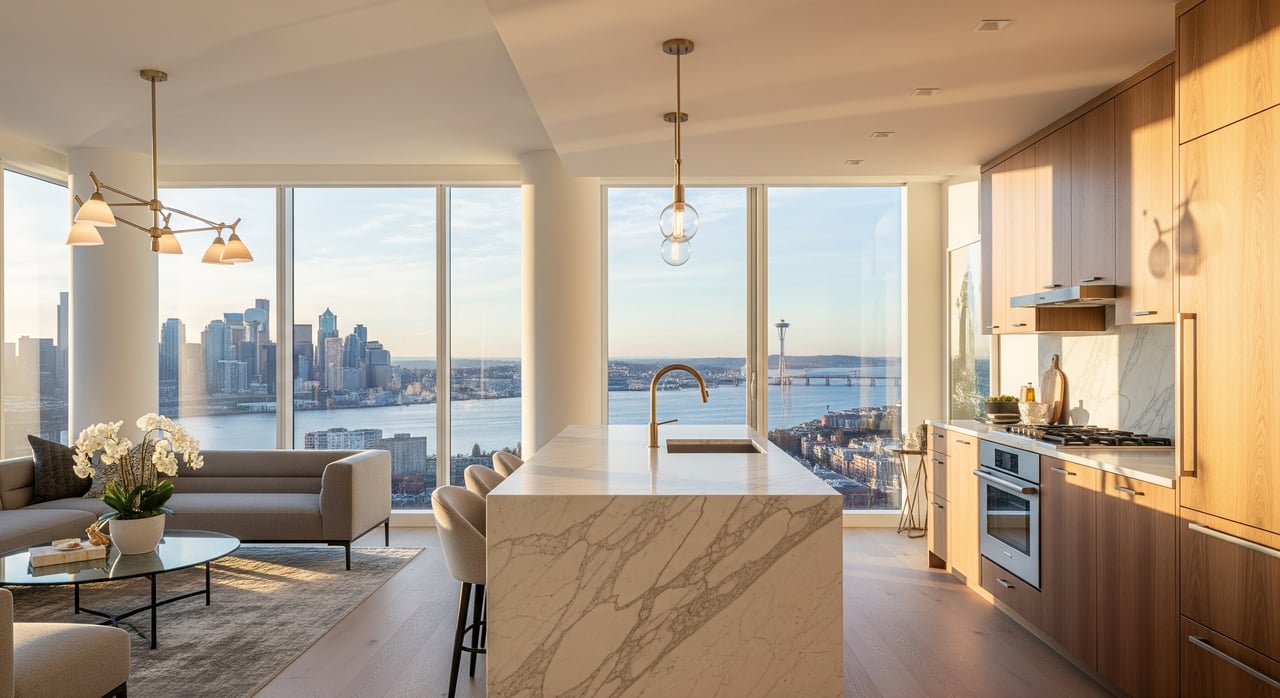
Financing a Downtown Seattle Condo: What To Know
December 4, 2025
December 4, 2025
Buying a condo in Downtown Seattle can feel different from buying a house. You are not just financing a home. You are financing into a building with its own rules, budget, and risk profile. If you know how lenders view downtown towers, you can set the right plan, avoid delays, and protect your negotiating power. This guide breaks down warrantable vs non‑warrantable status, loan options, timelines, and the documents you should gather early. Let’s dive in.
In Downtown Seattle, many condos sit in luxury high‑rises and mixed‑use projects with retail, office, or hotel components. Lenders look beyond your credit and income. They also underwrite the building’s financial health and legal status. That building review can impact your loan type, down payment, interest rate, and closing timeline.
If a building fits standard investor rules, more conventional loan choices open up. If it does not, you may need specialty financing, more cash, and extra time. Knowing which path you are on helps you write stronger offers and set realistic closing dates.
A warrantable condo meets the project eligibility rules used by mainstream investors, often Fannie Mae and Freddie Mac. When a project is warrantable and you qualify, conventional conforming loans are usually the most cost‑effective route. You get broader rate and term options and a smoother underwriting process.
A non‑warrantable condo fails one or more of those project rules. That can limit your lender choices and raise your required down payment. Portfolio or specialty lenders may still approve the loan, but terms are often tighter.
Downtown Seattle buildings become non‑warrantable for several common reasons:
These are project‑level risks. Lenders and investors want to avoid issues that affect many units at once.
If the project is warrantable and you meet income and credit rules, a conventional loan is often the most affordable choice. Some programs support low down payments for eligible borrowers. Exact limits depend on occupancy, loan size, and the project’s status.
Even in warrantable buildings, many lenders add local overlays for downtown high‑rises. You may see extra reserve requirements or tighter credit standards based on market risk.
FHA loans can be attractive if you qualify and want a lower down payment. FHA financing often allows 3.5% down for eligible borrowers, but the condo project must be FHA‑approved. Some luxury towers do not pursue FHA approval, and approvals can take time.
VA financing can provide up to 100% loan‑to‑value for eligible veterans when the project is VA‑approved. As with FHA, the lack of project approval is a barrier. Check approval status early and plan your financing contingency accordingly.
Many luxury units downtown exceed conforming loan limits and require jumbo financing. Jumbo lenders set their own rules and often ask for larger down payments, strong reserves, and conservative debt‑to‑income ratios. Some lenders will not lend in non‑warrantable projects, while others will if you bring more cash and liquidity.
For non‑warrantable projects, portfolio lenders, private banks, and specialty condo lenders can step in. Expect higher rates, lower maximum LTVs, and additional reserves. Down payments of 20% to 50% or more are common, depending on the issues.
Lenders want to see a healthy reserve fund and a recent reserve study. This helps avoid surprise special assessments and deferred maintenance. Expect to provide the current reserve balance, budget contributions, and any assessment history.
In downtown towers, amenities like concierge, pools, fitness centers, and parking raise operating costs. Older buildings may face elevator modernization or façade work, which makes reserve planning even more important.
Higher owner‑occupancy can signal stability. Lenders will ask for the owner‑occupancy rate, investor share, and rental policies in the governing documents. Downtown buildings often attract investors and short‑term rentals. City of Seattle rules on short‑term rentals can influence lender views.
Mixed‑use elements change risk. Lenders review how much of the project is commercial, the lease terms for tenants, and how costs are allocated. Hotel operations or lock‑off units face extra scrutiny because of transient use.
If a developer or single owner holds many units, lenders worry about market control and liquidity. They look at unit counts per owner, the status of developer control, and the pace of sales to unaffiliated buyers.
Construction defect claims, seismic or building envelope issues, and large assessments create uncertainty. Lenders review attorney letters, budgets, assessment purpose, and plans to restore reserves. In Seattle’s climate and seismic zone, these topics come up more often than buyers expect.
Expect a review of the master policy, coverage levels, deductibles, and fidelity bond details. High‑value towers may use layered insurance or large deductibles. Lenders want to see how the HOA would cover those deductibles if needed.
Bylaws and CC&Rs must preserve lender rights. Provisions that limit foreclosure or change lien priority can jeopardize eligibility. Lenders will review the documents and amendments for any red flags.
Unfinished projects or missing common elements can pause eligibility. Lenders check for certificates of occupancy, final completion, and proper conveyance of common areas to the HOA.
If you want seasoned guidance on which downtown buildings align with your financing, reach out. With four decades of local experience, we can help you set a clear path from offer to closing and negotiate with confidence. Contact Jeffrey A. Valcik and Associates, Inc. to discuss your goals and next steps.
Stay up to date on the latest trends in real estate.
September 24, 2026

September 17, 2026

September 10, 2026
September 3, 2026
August 27, 2026
August 20, 2026
August 13, 2026

August 13, 2026
August 6, 2026
Valcik Bilgin and Associates is dedicated to helping you find your dream home and assisting with any selling needs you may have. Contact him today to discuss all your real estate needs!

JEFFREY VALCIK
EVRIM BILGIN
ADDRESS
120 Westlake Ave N #924
Seattle, WA 98109