Downtown Seattle Condo Amenities That Protect Resale Value
March 24, 2026
March 24, 2026
Looking at condos downtown and wondering which amenities really help your resale value five or ten years from now? You are not alone. In Seattle’s core, buyers reward everyday convenience and solid building finances more than flash, especially when the market is shifting. In this guide, you will learn which amenities reliably protect resale, what to verify in the HOA documents, and how local transit investments and operating costs shape demand. Let’s dive in.
Amenities influence resale through two channels: demand and risk. The best amenities attract a wider buyer pool without adding heavy, recurring costs. High‑cost features that few owners use can shrink your buyer pool when dues climb. Industry guidance on valuing property performance highlights this balance between benefits and operating costs, which appraisers and lenders consider during financing and resale decisions (high‑performance valuation resources).
Downtown condo demand has tracked inventory and rates, with noticeable differences between newer, amenity‑rich buildings and older stock. Recent regional snapshots show that activity and pricing are sensitive to supply, sentiment, and operating costs, so the value of amenities can vary by market phase (NWMLS market snapshot). In tight markets buyers tolerate more dues for convenience. In softer markets, high dues reduce interest and days on market lengthen.
Proximity to frequent transit expands your buyer pool and usually shortens days on market. Downtown stations such as Westlake, University Street, and Pioneer Square anchor daily commutes, and ongoing Link system expansions are a durable demand driver (Sound Transit adopted plan).
What to verify:
Parking carries real value downtown, yet it is costly to build and maintain. Research shows structured parking has substantial construction and operating costs, which is why deeded spaces and clear policies matter for resale (parking cost analysis). Dedicated storage lockers and secure bike rooms also rank high on urban buyer checklists.
What to verify:
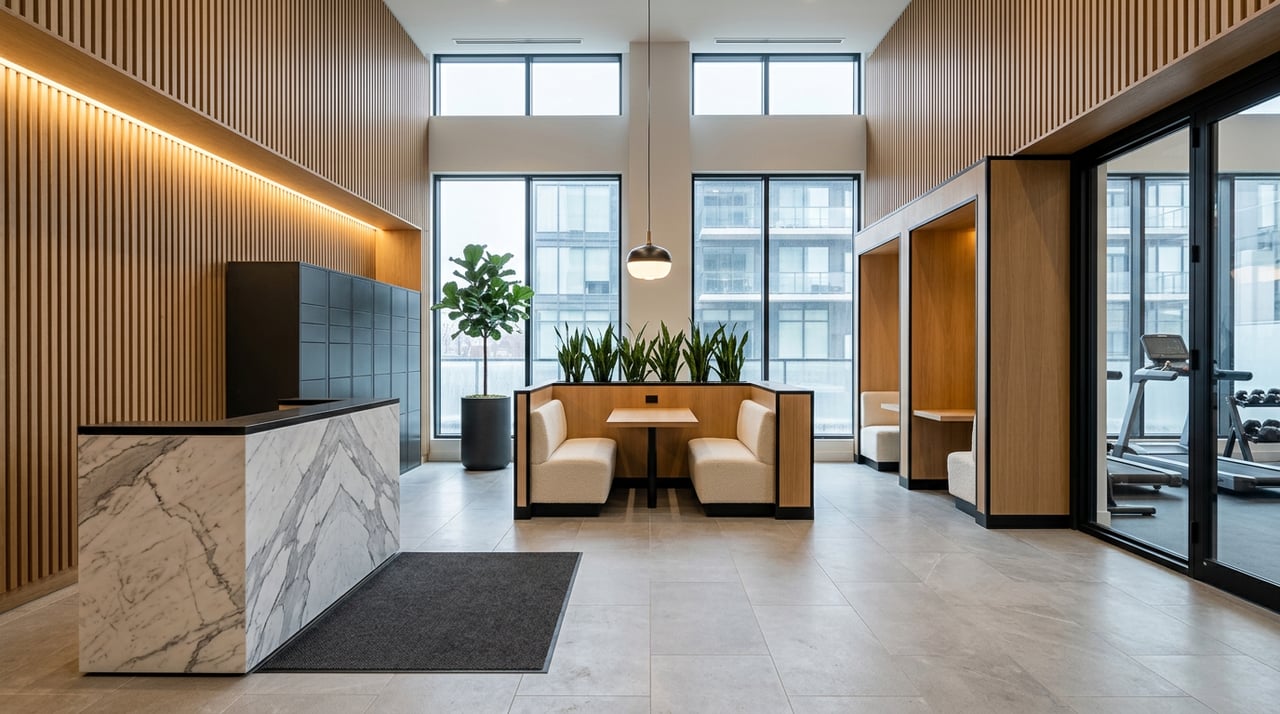
On‑site fitness rooms, well‑designed lounges, and low‑maintenance common areas get steady use and are easier to run than resort‑level features. Industry rankings consistently place fitness among the most‑valued condo amenities, which helps protect your resale pool without oversized costs if right‑sized (amenity rankings overview).
What to verify:
Hybrid work increased demand for quiet, professional spaces close to home. Buildings that offer co‑working lounges, reservable conference rooms, and phone booths meet a growing urban buyer need and often at a lower cost than 24/7 staffing (property management trend insights).
What to verify:
Private balconies and well‑maintained roof terraces add usable space and are widely preferred in urban settings. Buyer surveys list outdoor access as a top community feature, especially where views and fresh air are part of the lifestyle (buyer preference research).
What to verify:
Concierge and hotel‑style services signal convenience at the luxury end, which can speed sales for higher‑priced units. The trade‑off is cost, since staffing raises dues and may reduce the pool of cost‑sensitive buyers in softer markets (luxury amenity trend analysis).
What to verify:
Fast, reliable internet and EV‑charging readiness have become baseline expectations for downtown buyers. Washington resale law requires disclosure around reserve studies and certain building details, and buyers increasingly scrutinize EV capacity and broadband options during due diligence (Washington resale statute).
What to verify:
Pet areas, wash stations, and flexible lounges are cost‑efficient differentiators downtown. They see broad use and rank well among commonly requested amenities in urban buildings (amenity rankings overview).
What to verify:
Strong resale is as much about building health as amenity lists. Washington law requires disclosure of reserve‑study information in resale packets, and buyers closely evaluate reserves, special‑assessment history, and insurance coverage (resale statute details). Buildings with documented capital planning and adequate reserves typically sell more easily.
What to verify:
Recent reporting points to a flight to quality in many metros. In practice, that means well‑located, well‑maintained, amenity‑smart towers attract steadier demand than dated buildings with high operating costs out of step with buyer usage patterns (PwC and ULI trends summary). In the Seattle‑Bellevue‑Everett corridor, this often shows up as stronger interest in Class A downtown towers near transit, with practical features like fiber internet, outdoor space, and secure parking rising to the top of shortlists.
Regional nuance:
The downtown Seattle condo amenities that best protect resale are the ones you will use every week, supported by realistic HOA budgets and a well‑funded reserve. Focus on transit access, deeded parking and storage, private outdoor space, dependable internet, and right‑sized fitness or workspaces. Then confirm the building’s financial health to reduce surprises and friction at resale. If you want to pressure‑test a specific building’s amenity mix and HOA health, we are here to help.
For tailored guidance on your building or a short list of downtown towers that fit your goals, connect with Jeffrey A. Valcik and Associates, Inc. to Request a Complimentary Home Valuation.
Stay up to date on the latest trends in real estate.
September 24, 2026
September 17, 2026

September 10, 2026
September 3, 2026
August 27, 2026
August 20, 2026
August 13, 2026
August 13, 2026
August 6, 2026
Valcik Bilgin and Associates is dedicated to helping you find your dream home and assisting with any selling needs you may have. Contact him today to discuss all your real estate needs!
JEFFREY VALCIK
EVRIM BILGIN
ADDRESS
120 Westlake Ave N #924
Seattle, WA 98109