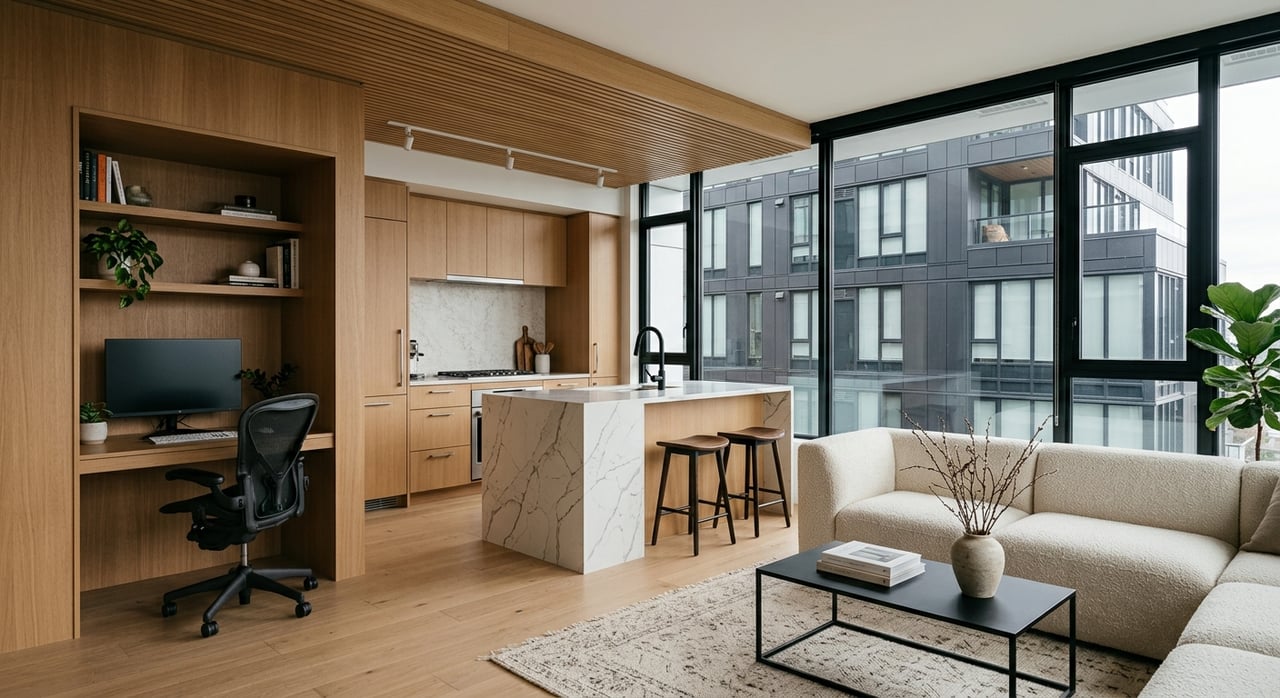
Relocating To Downtown Seattle For Work: Housing Guide
April 16, 2026
April 16, 2026
Thinking about moving to Downtown Seattle for a new job? Your housing choice can shape everything from your commute to your daily routine. If you are comparing a condo in the urban core with a more residential feel in Queen Anne or Magnolia, this guide will help you understand the tradeoffs so you can make a confident move. Let’s dive in.
Downtown Seattle is more than a workplace hub. According to the Seattle Office of Planning and Community Development, it is the city’s largest employment center and second largest housing center, which helps explain why so many relocating employees start their search here.
The area has also become increasingly residential over time. The Downtown Seattle Association’s 2025 snapshot estimates about 109,845 residents and 317,579 jobs downtown, with residential population up 80% since 2010. For you, that means you are not moving into an office-only district. You are moving into an active, mixed-use part of the city where people live, work, commute, and spend time throughout the day.
Downtown also offers a transit-rich environment that can simplify a relocation. The same DSA report notes about 145,000 average weekday worker trips, 9.2 million boardings at the four downtown Link stations, and more than 15 million unique visitors. If your goal is to reduce driving and keep your workday efficient, downtown has a strong practical case.
If you are picturing a traditional single-family home search, Downtown Seattle may feel very different. The housing stock is overwhelmingly multifamily, which means your options will usually center on apartment buildings and condo towers rather than detached houses.
According to the Downtown Seattle Association, nearly half of all multifamily units built in Seattle since 2019 are downtown. The district added more than 1,600 multifamily units in 2025, with another 3,300 under construction. That level of development gives relocating buyers and renters more inventory in a relatively compact area.
Household sizes are also small downtown. DSA reports an average household size of 1.47 overall and 1.68 in the downtown core. In practical terms, that often aligns with the needs of singles and couples who want convenience, shorter commutes, and building amenities instead of extra square footage.
Most downtown moves involve one of two paths:
For many professionals, the appeal is straightforward. You may be able to trade yard space and a longer commute for walkability, easier access to transit, and a building with services or amenities that support a busy schedule.
Even within downtown, housing options vary by subarea. The DSA reports that Belltown remains the most densely populated downtown neighborhood, while South Lake Union has seen the fastest resident growth since 2010. That does not mean one is better than the other, but it does show how different pockets of downtown can feel depending on density, building style, and the pace of new development.
If you are relocating for work, the real question is often not whether downtown is good. It is how much commute ease, space, and neighborhood feel you want to balance.
Here is a simple way to frame it based on the available city and transit information:
Area | General feel | Commute setup | Housing pattern |
|---|---|---|---|
Downtown Seattle | Urban core, dense, active | Shortest and least complicated | Mostly condos and apartments |
Queen Anne | Close-in residential alternative | Direct transit connection to downtown | Mix of housing with walkable amenities |
Magnolia | More separated residential option | Direct access, but more bridge-dependent | More removed neighborhood setting |
Queen Anne is often the most natural comparison for someone who wants to stay close to downtown without living in the core. A City of Seattle historic context statement describes Queen Anne as having a convenient close-in location, relatively high-density character, quality housing stock, and amenities within walking distance.
For commuting, current Metro service helps keep the connection simple. King County Metro Route 2 directly links Queen Anne, Lower Queen Anne, and Downtown Seattle throughout the day. If you want a more residential setting without giving up a manageable trip to the office, Queen Anne may be worth considering.
Magnolia offers a different kind of compromise. A City of Seattle report describes it as a distinct neighborhood with retail and commercial activity on the edges, which gives it a more separated feel from the urban core.
Transit still connects Magnolia to downtown. Current Route 24 service is cited in the research as providing a direct link between Magnolia, Lower Queen Anne, and downtown. At the same time, Magnolia’s access pattern is more bridge-sensitive, so your commute may feel less straightforward than living downtown or in Queen Anne.
Your best fit depends on what matters most in daily life:
For many relocators, housing is only part of the decision. The bigger question is what your routine will feel like once the moving boxes are gone.
Downtown’s convenience is one of its clearest advantages. The Downtown Seattle Association reports 63 new street-level businesses in 2025, nearly half of them dining establishments, along with 879,000 theatergoers and 10.4 million shared-mobility trips. That level of activity supports a lifestyle where errands, dinner plans, and entertainment can all fit into the same neighborhood.
Transit also supports car-light living. King County Metro notes that its Trip Planner covers buses, Link, Sounder, water taxi, ferries, the Seattle Center Monorail, and the Seattle Streetcar, although disruptions and reroutes can still affect timing. In other words, you can often build a routine around transit, but it is still smart to leave room for real-world variability.
If you are relocating before you can tour in person, photos and polished marketing can only tell you so much. The details that matter most are often the ones a listing gallery does not fully show.
When reviewing a condo remotely, pay close attention to:
These factors are especially important in downtown high-rise living, where two units in the same building can feel very different depending on placement and building operations.
A practical remote-shopping checklist includes three key steps:
That approach can help you look past staging and listing photography and focus on the facts that affect day-to-day livability.
For many buyers, the right move is not just finding a property. It is creating a short list based on your actual work routine and lifestyle priorities.
Start by asking yourself:
Once those answers are clear, your search often becomes more focused. Downtown, Queen Anne, and Magnolia each serve a different version of the same goal: making your work move fit your everyday life.
If you are weighing downtown living against nearby in-city options, working with a broker who understands Seattle’s neighborhood-level tradeoffs can save time and help you avoid costly assumptions. Jeffrey A. Valcik and Associates, Inc. brings deep experience in Downtown Seattle, Queen Anne, Magnolia, and other core in-city neighborhoods, with the consultative guidance many relocation clients value when making decisions from near or far.
Stay up to date on the latest trends in real estate.
September 24, 2026
September 17, 2026

September 10, 2026
September 3, 2026
August 27, 2026
August 20, 2026
August 13, 2026

August 13, 2026
August 6, 2026
Valcik Bilgin and Associates is dedicated to helping you find your dream home and assisting with any selling needs you may have. Contact him today to discuss all your real estate needs!

JEFFREY VALCIK
EVRIM BILGIN
ADDRESS
120 Westlake Ave N #924
Seattle, WA 98109