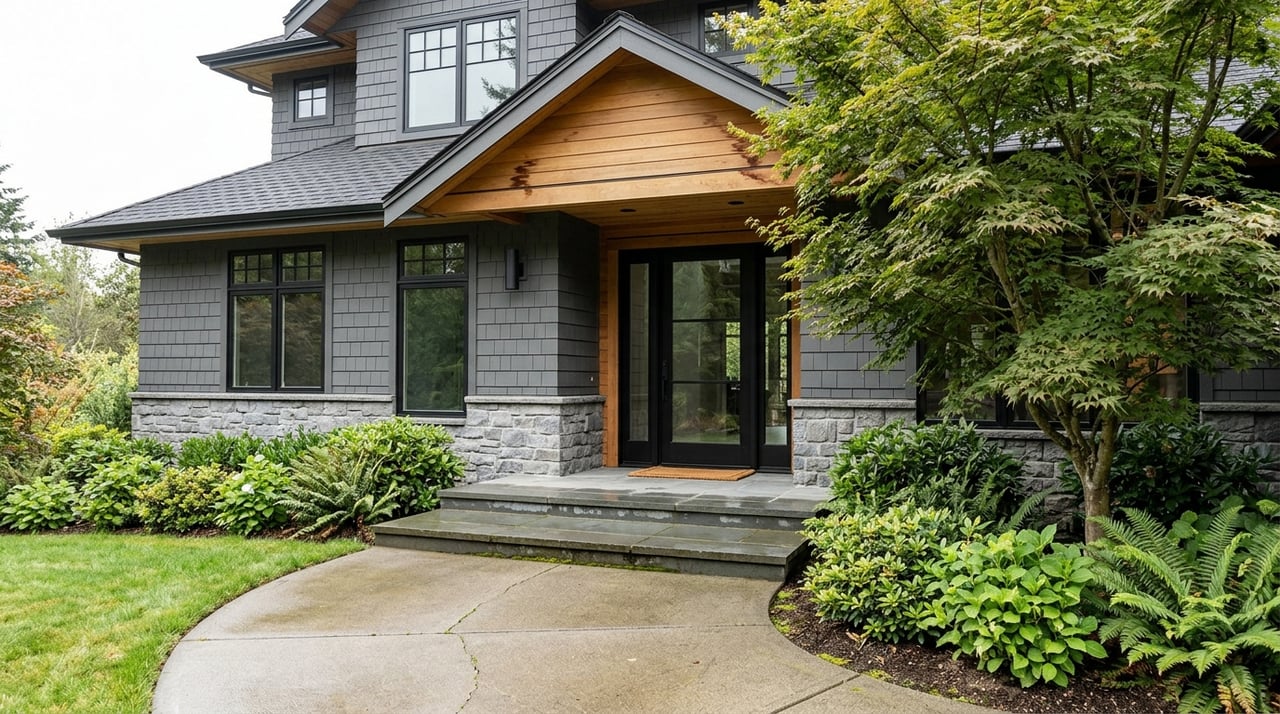
Upsizing Or Downsizing Within Magnolia: How To Decide
June 11, 2026
June 11, 2026
Wondering whether you should get more space or simplify your life without leaving Magnolia? That question is more common than ever in a neighborhood where homes hold value, inventory is limited, and each move tends to be more about lifestyle fit than square footage alone. If you are weighing an upsize or downsize in Magnolia, this guide will help you compare costs, daily function, and market realities so you can make a confident next-step decision. Let’s dive in.
Magnolia is not a neighborhood where you can assume there will always be a perfect next home around the corner. King County describes it as a built-out peninsula neighborhood that is primarily single-family residential-zoned, with about 97% of parcels already improved and only about 3% vacant. That means moving within Magnolia often involves choosing between a renovated older home, a condo, a townhome, a teardown opportunity, or a larger view property.
The neighborhood also has a distinct housing personality. Many homes were built in the late 1940s and 1950s, and newer inventory often comes through redevelopment or condo conversion rather than large new subdivisions. In practical terms, your decision is usually less about finding a “better” home and more about finding a home that works better for the next stage of your life.
If you plan to sell and buy within Magnolia, timing matters. Recent market data show a median sale price of $1,309,513, median days on market of 8, and a 100.7% sale-to-list ratio, with the market described as very competitive. When homes move this quickly, you need your pricing, financing, and timeline lined up early.
That pace affects both upsizers and downsizers. If you need sale proceeds from your current home to fund your next purchase, preparation is critical. In a competitive market, a delay on one side of the move can affect the other.
Upsizing in Magnolia often means buying function, privacy, or flexibility rather than just more rooms. In this neighborhood, a larger move might mean shifting from a condo to a townhome, from a smaller detached home to one with more separation of space, or from a standard lot to a property with a stronger view component.
For many households, the push to upsize comes from real day-to-day needs. You may need a dedicated office, a guest room, more storage, or better separation between work and living space. In Magnolia, that often points buyers toward larger detached homes or larger townhomes with flexible room layouts.
Current listing snapshots and recent sales show a fairly clear price ladder in Magnolia:
That spread is important because the jump from one property type to another can be meaningful. A move from condo to detached home in Magnolia is not just a change in size. It is often a major budget shift.
Downsizing in Magnolia does not always mean giving something up. In many cases, it means trading unused space and maintenance for convenience, liquidity, and a simpler routine. If your current home no longer matches how you live, a smaller property in the same neighborhood can preserve your Magnolia lifestyle while reducing the demands of ownership.
This is especially relevant in a neighborhood with older homes and view-oriented lots. A beautiful house can come with stairs, steep driveways, larger yards, and more upkeep than you want long term. A smaller, flatter property or an elevator-access condo may be a better fit for the next five to ten years.
Magnolia offers neighborhood amenities that support staying local after a move. Seattle Parks notes that Magnolia Park offers Puget Sound views and picnic amenities, Magnolia Boulevard provides a long green strip with views, and Magnolia Community Center offers recreation and senior programs. For many homeowners, that makes it easier to simplify housing without feeling disconnected from the neighborhood they know.
If you are torn between upsizing and downsizing, start with a practical framework. These five questions can quickly clarify which direction makes more sense.
Think about how you live today, not how you lived five or ten years ago. If you need workspace, guest space, or better room separation, upsizing may solve real problems. If entire rooms sit unused and upkeep feels heavier each year, downsizing may be the smarter fit.
In Magnolia, maintenance is not just about interior space. It can also include stairs, landscaping, driveway grade, and hillside conditions. King County notes that Magnolia includes steep-slope and past slide areas, so practicality matters as much as aesthetics when you compare properties.
This is where many decisions become clear. A move should start with a realistic net sheet, not just an estimate of what your current home might sell for. You need to subtract mortgage payoff, any liens, prep costs, moving costs, and selling taxes to understand what you will actually have available.
The right move should support your near future, not just solve a short-term frustration. If you expect more time at home, multigenerational living, or regular guests, more space may be worth it. If you want simpler living, easier travel, or fewer physical demands, downsizing may better support that plan.
Because Magnolia is so built out, some homeowners find that changing the current home is more practical than finding a new one nearby. Depending on your lot, home condition, and budget, renovation may be worth comparing against the cost of moving. In Magnolia, the real alternatives are often renovation, teardown, condo, townhome, or a different detached home.
A Magnolia move can look appealing on paper, but the numbers deserve close attention. Washington’s real estate excise tax, or REET, is generally paid by the seller and includes the graduated state REET plus local REET. Seattle’s city REET totals 0.5% through two separate 0.25% taxes.
Using the recent Magnolia median sale price of $1,309,513 as an example, the estimated REET alone is about $22,364 before other closing costs. That does not include moving expenses, home preparation, or any work needed to make your current property market-ready. This is one reason a detailed net sheet is so important before you decide to move up or down.
Before you commit, compare these side by side:
For long-time owners, taxes can influence the decision. If you owned and used the home as your main residence for at least two of the five years before sale, you may be able to exclude up to $250,000 of gain, or up to $500,000 on a joint return, under current IRS rules. That can be especially relevant for Magnolia owners who have seen substantial appreciation over time.
Some homeowners may also want to review Washington’s property-tax exemption and deferral programs for seniors, people retired due to disability, and certain disabled veterans. Eligibility depends on ownership, occupancy, and income thresholds, so it is worth checking whether staying put, downsizing, or changing property type affects your broader financial picture.
You may be a good candidate to upsize within Magnolia if your current home creates daily friction. Maybe you are working from the dining table, hosting family without enough privacy, or feeling boxed in by storage and layout limits. In a neighborhood with a wide price ladder, moving up can create a real quality-of-life improvement if the numbers work.
Upsizing can also make sense if you strongly value privacy, lot size, or a better view. Since about 39% of Magnolia parcels have some degree of view, view premiums are a real part of the neighborhood’s pricing structure. If that feature matters to you, it should be weighed as a lifestyle choice and a budget decision.
You may be ready to downsize if your current home feels like a project instead of a pleasure. That can show up as unused rooms, growing maintenance lists, stairs that feel less convenient, or a desire to free up cash without leaving Magnolia. In that case, moving to a condo, smaller townhome, or more manageable detached home can create more flexibility.
Downsizing also makes sense for households that travel frequently or want a lock-and-leave setup. Magnolia’s current inventory includes condos and townhomes that can support that lifestyle while keeping you close to the neighborhood routines and amenities you already enjoy.
Because Magnolia is competitive, built out, and highly segmented by property type, these decisions benefit from precise local analysis. A view home, a mid-century detached house, a townhome, and a condo can each sit on a very different value track, even within the same neighborhood. That is why the first step is not guessing whether you should upsize or downsize. It is understanding what your current property is worth today and what your best Magnolia options realistically look like.
For homeowners thinking about a move, strong planning can also reduce stress. Preparing a home for sale, coordinating vendors, setting a pricing strategy, and aligning the purchase timeline all matter more in a fast-moving market. The right guidance helps you compare not just what is possible, but what is practical.
If you are weighing an upsize or downsize in Magnolia, a detailed valuation and move plan can make the answer much clearer. To talk through your options with a seasoned local advisor, connect with Jeffrey A. Valcik and Associates, Inc..
Stay up to date on the latest trends in real estate.
September 24, 2026
September 17, 2026

September 10, 2026

September 3, 2026
August 27, 2026
August 20, 2026
August 13, 2026

August 13, 2026
August 6, 2026
Valcik Bilgin and Associates is dedicated to helping you find your dream home and assisting with any selling needs you may have. Contact him today to discuss all your real estate needs!

JEFFREY VALCIK
EVRIM BILGIN
ADDRESS
120 Westlake Ave N #924
Seattle, WA 98109