Should You Renovate Before Selling Your Magnolia Home?
June 18, 2026
June 18, 2026
Wondering whether you should renovate before selling your Magnolia home? In a neighborhood where buyers often compare presentation closely, that question can have a real impact on your timeline, budget, and final sale result. The good news is that you do not always need a major remodel to make a strong impression. In many cases, the smartest move is a focused plan that improves what buyers notice first and avoids spending where resale recovery is weaker. Let’s dive in.
Magnolia remains a high-price Seattle neighborhood where presentation matters. Realtor.com’s April 2026 snapshot shows a median listing price of $1.225 million, 118 homes for sale, a median of 26 days on market, and a 99% sale-to-list ratio. Realtor.com also characterizes Magnolia as a seller’s market.
That context matters because it changes how you should evaluate pre-sale work. The goal is not to ask whether your home could be improved. The better question is whether a project will reduce buyer hesitation and support your price without adding unnecessary cost or delay.
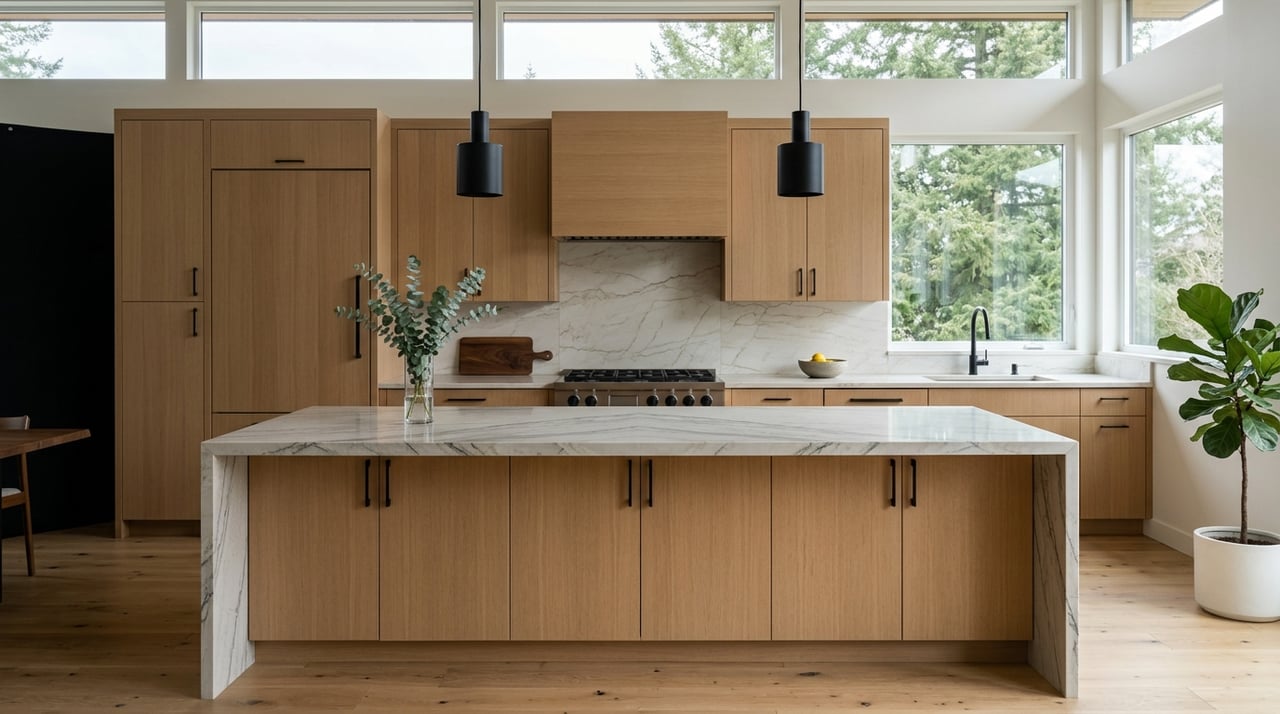
Before you think about a large renovation, focus on the spaces that shape first impressions online and in person. According to the 2025 NAR staging report, 83% of buyers’ agents said staging made it easier for buyers to visualize a property as a future home.
The same report found that the rooms buyers’ agents most often identified as important to stage were the living room at 37%, the primary bedroom at 34%, and the kitchen at 23%. Those are the spaces most likely to anchor your listing photos and early showings. If you are deciding where to spend time and money first, that is a practical place to begin.
For many Magnolia homes, the most effective updates are not dramatic. They are the changes that help your home feel clean, well cared for, and easy to imagine living in.
That often means addressing:
NAR also reported that many sellers’ agents do not stage every home and instead recommend decluttering or correcting property faults. That supports a simple idea: visible condition issues often matter more than expensive redesign choices.
If your Magnolia home is fundamentally sound, targeted improvements often make more financial sense than a broad remodel. Seattle’s 2024 Cost vs. Value data show that several smaller, visible projects had especially strong resale recapture.
Here are some examples from the Seattle market:
These numbers suggest that curb appeal and modest kitchen improvements can work harder than many sellers expect. They also fit how buyers tend to respond to homes at first glance, especially in photos and during the first few minutes of a showing.
High-cost projects do not always deliver high resale recovery. In fact, Seattle’s data show the opposite in several common categories.
A midrange major kitchen remodel recouped 57.7%. An upscale bath remodel recouped 56%, a midrange primary suite addition 43.9%, and an upscale bathroom addition 35.7%.
That does not mean these projects are never worthwhile. It means they should be approached carefully when your main goal is selling soon. If you are preparing to list, broad renovation plans can tie up capital, create permit complications, and produce a weaker return than a more focused update plan.
Some projects fall in the middle. In Seattle, a midrange bath remodel recouped 80.7%, and vinyl window replacement recouped 81.6%.
These can be reasonable choices if your home has a clear condition or function issue that buyers are likely to notice. For example, worn windows or a bathroom with obvious deferred maintenance may affect how buyers judge the rest of the home. In that case, a measured update may help support confidence during showings and inspections.
If you are unsure how far to go, this framework can help:
In Magnolia, where pricing is already strong, over-improving can be just as costly as under-preparing. The best plan is usually the one that removes objections without rebuilding rooms buyers would have accepted as-is.
Staging is often one of the most practical pre-sale investments because it improves presentation without the risk of a major capital project. NAR reported a median staging-service spend of $1,500, or $500 when the sellers’ agent personally staged the home.
The same report found that staged homes most commonly saw only slight reductions in time on market. That is still useful. Staging is less about promising a dramatic market shift and more about helping your home show clearly, photograph well, and feel inviting to buyers.
Because living rooms, primary bedrooms, and kitchens rank high in buyer attention, staging those spaces can have an outsized effect. A well-edited room feels bigger, calmer, and easier to understand.
In a neighborhood like Magnolia, where many homes compete on character, layout, and presentation, that clarity matters. Buyers may forgive a home that is not brand new, but they are less likely to overlook a home that feels crowded, tired, or confusing.
Cosmetic work is one thing. Structural or systems-related work is another.
Seattle’s permit guidance says minor repairs or alterations costing $6,000 or less in any six-month period usually do not require a permit. Examples of work that usually does not require a permit include painting or cleaning a building, installing kitchen cabinets, and adding paneling or other surface finishes over existing wall and ceiling systems.
That said, the city also notes that most projects require a permit. A permit is required for work involving load-bearing supports, changes to the building envelope, or work that reduces egress, light, ventilation, or fire resistance, no matter how small the project.
A seller often starts with what seems like a simple idea. Then the project moves from cosmetic refresh into structural, exterior, or systems work. Once that happens, your listing timeline can change.
That is why planning matters. If your goal is to sell this season or within a defined window, it is wise to separate true pre-sale presentation work from deeper renovation plans that may not pay off in time.
Washington disclosure rules are another reason to make decisions early. For improved residential property, the seller must deliver a completed disclosure statement after mutual acceptance, and the buyer then has three business days to accept or rescind unless that right is waived.
If you later learn information that makes the disclosure inaccurate, you must amend it unless corrective action restores accuracy at least three business days before closing. In practical terms, that means unfinished questions about condition can follow you into the transaction if they are not addressed up front.
Not every issue needs a renovation. Some issues call for repair, and others may simply need to be disclosed accurately.
A thoughtful pre-sale plan helps you sort those decisions in the right order:
This kind of sequencing can help you avoid overspending while still presenting the home responsibly and competitively.
For most Magnolia sellers, the answer is not a full renovation. If your home is structurally sound and generally well maintained, the research supports putting your first dollars into cleaning, decluttering, staging, and a few high-visibility improvements.
If you have a dated entry, an aging garage door, or a kitchen that would benefit from a modest refresh, those updates may offer a better resale profile than a full remodel. If you are considering major work, it is worth slowing down and testing whether the cost, permit demands, and timeline truly support your selling goals.
The right answer depends on your home’s condition, your timing, and Magnolia buyer expectations at your price point. That is where a broker-led prep strategy can be especially valuable, helping you focus on the updates most likely to improve presentation and avoid spending that may not come back at closing.
If you are preparing to sell in Magnolia and want a tailored plan for repairs, staging, and market readiness, Jeffrey A. Valcik and Associates, Inc. can help you evaluate what is worth doing before you list.
Stay up to date on the latest trends in real estate.
September 24, 2026
September 17, 2026

September 10, 2026
September 3, 2026
August 27, 2026
August 20, 2026
August 13, 2026
August 13, 2026
August 6, 2026
Valcik Bilgin and Associates is dedicated to helping you find your dream home and assisting with any selling needs you may have. Contact him today to discuss all your real estate needs!

JEFFREY VALCIK
EVRIM BILGIN
ADDRESS
120 Westlake Ave N #924
Seattle, WA 98109