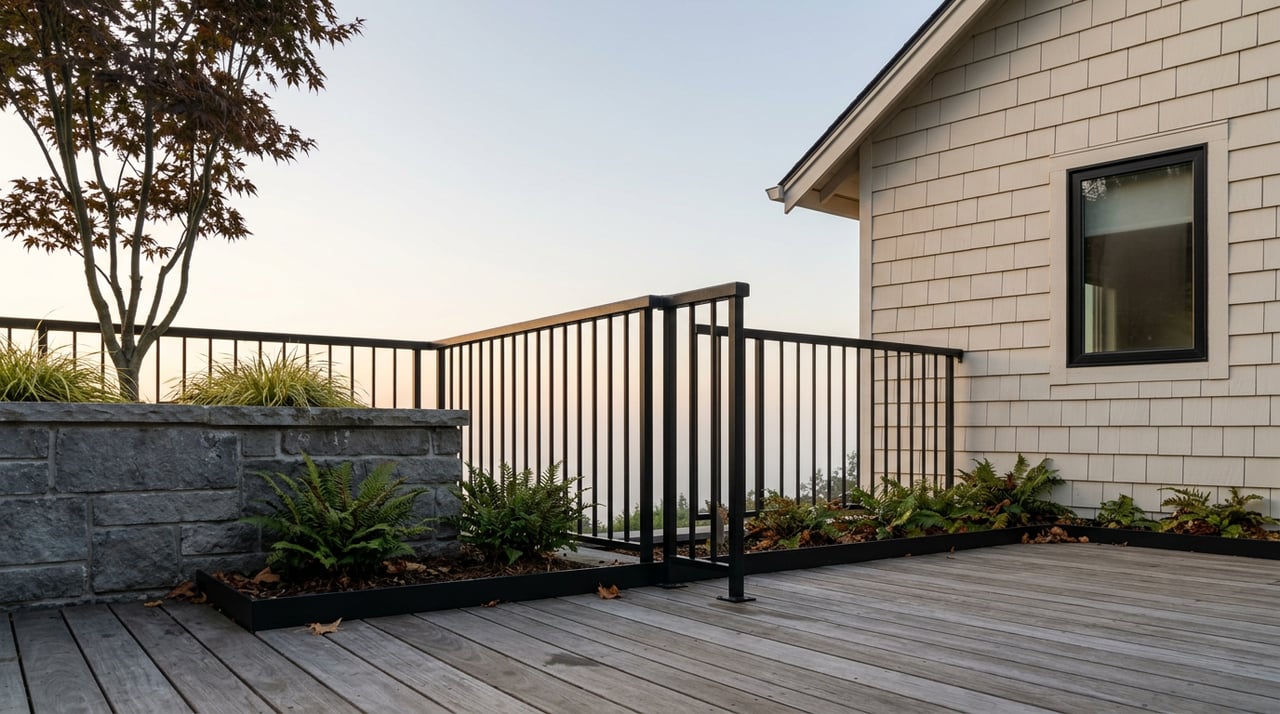
Queen Anne Sells the View. Only the South Slope Ever Fought to Keep It.
August 27, 2026
August 27, 2026
Two listings went up on Queen Anne in the same month this summer, four blocks apart, within $50,000 of each other on price. Both marketed a downtown skyline view. Both showed the Space Needle in the hero photo. On paper, a buyer comparing them would treat the view as the same asset priced twice.
It isn't. One of those views sits inside a zoning history that a group of residents spent years in court defending. The other exists because a neighbor's cedar hasn't grown past the eave line yet. Nothing on either listing sheet tells you which is which, and the difference matters more than most of what does show up on a disclosure form.
"View" on a Queen Anne listing covers two entirely different products, and the industry doesn't separate them. One is what I'd call a structural view: sightlines protected by the height limit on the buildings around you, so a developer can't put up something taller and erase what you paid for. The other is a vegetative view: a sightline that exists today because the trees on the lots between you and the water happen to be short, young, or recently topped. Both look identical in a listing photo. Only one of them survives a decade of somebody else's landscaping choices.
This distinction rarely gets raised because most Seattle neighborhoods don't have enough history to make it visible. Queen Anne does, and the reason traces back to a specific fight on the hill's south slope that residents won decades ago.
Most buyers I talk to assume that if a property is marketed with a view, some ordinance backs it up. Washington has no such statute, and this isn't a recent gap. A Seattle Times column from 1996 quoted the city arborist at the time, Jerry Clark, explaining flatly that on private property, there is no state law or city ordinance that mandates trees be kept at certain heights to preserve someone's view. A follow-up Seattle Times piece in 2004 checked again with a nationally recognized tree-law attorney and got the same answer, noting that view statutes exist in a handful of municipalities around the country but "Seattle isn't one of them." Nearly thirty years apart, both pieces landed on the same conclusion.
The legal reference site Nolo describes it the same way for buyers anywhere in the country: absent a recorded view easement or an HOA covenant, a neighbor can grow a tree as tall as they want, even directly in front of your window. FindLaw's guidance to homeowners in a view dispute is essentially to document the sightline with photographs and negotiate, because litigation over vegetation is a long shot almost everywhere trees aren't already regulated by name.
So the vista in listing photo number one, taken from a deck with nothing but open air between the buyer and the Sound, is one grown tree away from being a different photo in five years. That's true for the overwhelming majority of view-marketed homes in this city.
Queen Anne's south slope, the blocks around what's now Kerry Park along West Highland Drive, is the exception, and it has a name attached to it: United South Slope Residents, or U.S.S.R. Developers at one point moved to build under zoning that would have added height and density to the slope, and the residents' group didn't just object at a public hearing. They organized house tours to raise money, hired land-use attorneys Thomas Goeltz, Susan Agid, and Jerry Hillis, and fought the developers through the courts after the city modified zoning for the south slope and several developers rushed to file permits under the old rules to be grandfathered in.
They won. According to the Queen Anne Historical Society's account of the fight, the resulting case established that environmental reviews under the State Environmental Policy Act must evaluate the cumulative impact of development rather than judging each project in isolation, a precedent the historical society notes "had far-reaching impacts across the state." That's not a neighborhood footnote. It's a piece of Washington land-use law that started with people trying to keep a hillside from being built over.
Kerry Park itself has its own small piece of that same instinct baked into its history. Albert and Katharine Kerry donated the land to the city in 1927 specifically to preserve the view for the public, and the plaque at the park still reads that it was given "so that all who stop here may enjoy this view." Long before U.S.S.R. existed, this particular slope already had a habit of treating its sightlines as something worth legally locking down rather than leaving to chance.
Here's where the story gets more useful for a buyer than a piece of neighborhood trivia. The south slope's height limit protects you from a new building rising up and blocking your skyline view. It does nothing about the arborvitae your neighbor planted eight years ago. The absence of a tree-view ordinance is citywide, and it applies inside the protected zoning just as much as outside it. Even on the single hill in Seattle that fought hardest for its view, a homeowner with a mature Douglas fir next door has the same legal standing as anyone else in the city: none, unless a view easement was privately negotiated and recorded on the title.
So the premium a buyer pays for a Queen Anne view is really two separate bets stacked on top of each other. One bet, on the south slope, has real legal weight behind it. The other bet, everywhere on the hill including the south slope, rests entirely on the growth rate of somebody else's landscaping and their willingness to keep it trimmed.
The numbers on the hill aren't moving as one market, which is itself a clue that buyers are pricing this unevenly, whether they realize it or not.
Area | Median sale price | Price per sq ft | Median days on market |
|---|---|---|---|
Queen Anne overall (3 months ending June 2026) | ~$1.0M, down 8.7% YoY | $625, up 5.2% YoY | 21 days, up from 8 last year |
East Queen Anne (3 months ending May 2026) | ~$1.0M, up 1.7% YoY | $639, down 6.4% YoY | 30 days, up from 8 last year |
West Queen Anne (mid-2026) | premium tier | $712 list, vs. $537 Seattle average | 67 days on average |
A neighborhood where price per square foot is climbing in one section and falling in another, while days on market triples in some pockets and stays flat in others, isn't behaving like a single micro-market. It's behaving like several different products being sold under one neighborhood name. Some of that spread is ordinary variation in lot size and condition. Some of it, I'd argue, reflects buyers slowly pricing in the difference between a view that's insured by zoning history and one that's insured by nothing at all.
A few questions get you most of the way to knowing which bet you're making:
None of this is legal advice, and if a specific dispute or negotiation is already in front of you, a real estate attorney familiar with Seattle land use is worth the call before you close.
Does Seattle have any view protection ordinance at all? No. City arborists and land-use attorneys quoted in Seattle Times reporting going back to 1996 have confirmed there's no state or city law requiring trees on private property to stay below a certain height to protect a neighbor's view.
Can a seller just promise my view in the purchase contract? A seller can only bind a neighbor's property through a recorded view easement, which has to already exist or be separately negotiated with that neighbor. A promise in a purchase contract that doesn't touch the neighboring parcel has no legal effect on that parcel.
If I buy on the protected south slope, is my view permanent? It's protected under the zoning as currently written, which is exactly the kind of thing that changed once already before residents intervened and fought to reverse it. Zoning can be amended by the city in the future. What's protected today is protected under today's code.
If you're weighing a view property on Queen Anne and want to know what's actually backing the price before you write an offer, I'd be glad to walk through it with you. Seattle Premier Properties offers a complimentary home valuation, and for view properties specifically, that conversation includes exactly this kind of zoning and history check before you commit to a number.
Stay up to date on the latest trends in real estate.
October 8, 2026
October 1, 2026
September 24, 2026
September 17, 2026

September 10, 2026
September 3, 2026
August 27, 2026
August 20, 2026
August 13, 2026
Valcik Bilgin and Associates is dedicated to helping you find your dream home and assisting with any selling needs you may have. Contact him today to discuss all your real estate needs!
JEFFREY VALCIK
EVRIM BILGIN
ADDRESS
120 Westlake Ave N #924
Seattle, WA 98109