Fewer Seattle homes burn heating oil today than at any point since the fuel arrived here a century ago. That sounds like good news for anyone selling a century-old home on Queen Anne Hill. It isn't. The tanks that remain are the ones nobody ever dug up, and every year that passes makes them older, not safer.
If you own a Craftsman bungalow, a Tudor Revival, or one of the Queen Anne Victorians that gave the hill its name, this is worth ten minutes of your attention before a buyer's inspector finds it for you.
Why This Concentrates on Queen Anne's Hill
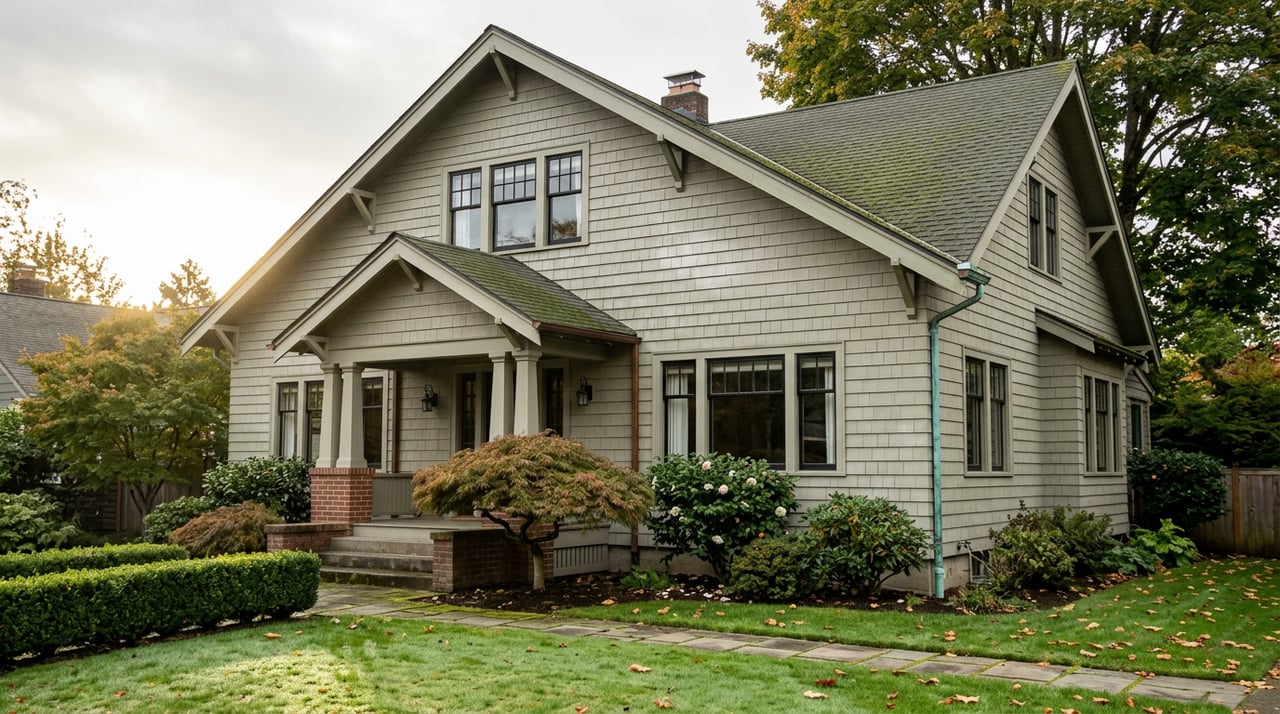
Heating oil was the default fuel for Seattle homes from roughly the 1920s through the 1960s, and Queen Anne's housing stock sits squarely inside that window. Upper Queen Anne is dominated by single-family homes built in the 1910s through 1940s: Craftsman bungalows and American foursquares, Tudor Revivals with brick and stucco exteriors, and the occasional grand Victorian from the neighborhood's earliest boom years. When natural gas became widely available in the 1970s, many of these homes converted, and the underground steel tank that used to feed the furnace was often left exactly where it sat.
Steel tanks have a functional lifespan of roughly 20 to 30 years. A tank installed during Queen Anne's own building boom, or even during the later 1950s and 60s conversion wave, is now well past that mark. Corrosion at this age isn't a possibility to plan around. It's closer to a certainty to plan for.
What the Disclosure Form Actually Asks
Washington's seller disclosure statement, the NWMLS Form 17 that every seller in this state completes, asks directly about underground oil tanks in its environmental section. The statute governing it, RCW 64.06, requires the completed form to reach the buyer within five business days of mutual acceptance unless both parties agree otherwise, and it makes clear the disclosure reflects the seller's actual knowledge at the time, not a warranty.
That last part matters more than it looks. A seller who genuinely doesn't know whether a tank exists can check "don't know" and be telling the truth. But on a pre-1970 Queen Anne home, "don't know" is a different answer than it would be on a house built in 1985. Buyers, their inspectors, and increasingly their lenders treat a "don't know" on an older home as an invitation to look closer, not a reason to move on. Fill pipes, vent pipes, capped copper lines near an old furnace location, and unexplained patches of unusually green lawn are the visual clues a standard home inspection can flag. None of them confirm a tank is there. Only a professional sweep using metal detection or ground-penetrating radar can do that.
The Permit Comes First, Not the Shovel
Once a tank is confirmed, Seattle's process doesn't bend for a closing date. Decommissioning must be performed or directly supervised by a specialist certified by the International Code Council as an underground storage tank decommissioner, and the work requires a permit from the Seattle Fire Department before anyone breaks ground. The city's own guidance on this is direct: the permit has to be approved before work starts, and there is no after-the-fact approval for work already completed. Skip that sequencing and a lender or insurer will treat the job as if it never happened, no matter how clean the yard looks afterward.
Under Washington law, the current property owner is liable for any contamination cleanup regardless of who originally installed the tank, and there is no statute of limitations on that liability. A tank that was pumped out and forgotten by a previous owner two decades ago is still your problem today if it turns out to have been leaking the whole time.
What It Actually Costs
The price range depends entirely on what's found once the ground opens up, and the spread is wide enough that guessing wrong can blow up a closing timeline.
| Scenario | Typical Cost Range |
|---|---|
| In-place decommissioning, no contamination | $700 to $1,000 |
| Full tank removal, no contamination found | $5,000 to $10,000 |
| Removal with soil remediation required | $10,000 to $15,000 |
| Complex contamination reaching groundwater | Can exceed $100,000 |
Homeowner's insurance almost never covers any of this. Standard policies commonly exclude contamination from underground storage tanks entirely, which is exactly why the cost tends to land on whoever owns the property when the problem surfaces.
The Assistance Program That Doesn't Run on Your Closing Calendar
Washington's Pollution Liability Insurance Agency runs a Heating Oil Loan and Grant Program that can genuinely help, offering up to $75,000 per applicant, including as much as $60,000 toward cleanup costs. It's a real resource, and most homeowners have never heard of it.
Here's the part that catches sellers off guard. The program doesn't accept applications year-round. It runs on fixed cycles, spring and fall, and the spring 2026 window closed on June 18. A Queen Anne homeowner who discovers a tank issue in August, right as they're preparing a fall listing, doesn't get to apply that week. They wait for the next cycle to open, which means the assistance that could offset a five-figure remediation bill may not be available on the same timeline as their buyer's patience.
This is the actual shape of the risk. It isn't that oil tanks are unusually expensive to deal with in the typical case. It's that a seller who waits until an inspection period to find out about one has already missed the window to use the cheapest fix and the public money that could have paid for it.
What This Means If You're Listing This Fall
State-level pollution data suggests at least one in four underground heating oil tanks still in the ground are leaking, and that share is expected to keep climbing as the remaining tanks age past their design life with nobody checking on them. Seattle's own count of active oil-heated homes has fallen under 6 percent of the city's housing stock as of this spring, down from a historic high near 17 percent. Every year that number drops, the tanks left behind get a year older and a year closer to failure.
For a Queen Anne seller, the sequence that avoids a crisis at the closing table is straightforward. Check whether a decommissioning was ever recorded on your property. Walk the yard for old fill pipes, vent pipes, or a patch of grass that looks different from the rest. If your home was built before 1970 and there's any history of oil heat, get a professional sweep before you list, not after an offer is already sitting on the table. If a tank turns up, start the permit process immediately, and if there's any hint of contamination, look into the PLIA program on its own calendar rather than yours.
None of this is complicated once someone has walked through it before. It's only alarming the first time, and for most sellers, that's the only time it happens.
Frequently Asked Questions
Do I have to disclose a tank I only suspect might be there? Washington's disclosure form asks what you actually know. If you have real reason to believe a tank exists, based on your home's age or a former oil furnace, the honest answer belongs on that form rather than left for a buyer's inspector to discover later.
Will my homeowner's insurance cover a leak if one is found? Generally not. Standard homeowner's policies typically exclude contamination from underground storage tanks, which is why the cleanup cost usually falls to the property owner rather than an insurer.
Can I sell my Queen Anne home with a known tank still in the ground? Legally, disclosure is what's required, not necessarily removal. In practice, lenders frequently decline to fund a purchase where an underground tank is present and undocumented, so an unresolved tank tends to become a negotiation over price or repair credit rather than a dealbreaker on its own.
If you're weighing a listing on Queen Anne Hill and want a straight read on how a home's age and history might affect timing or price, Seattle Premier Properties can walk through it with you. Request a Complimentary Home Valuation and we'll start with what your specific property actually needs, not a generic checklist.